Feb 7, 2026
Crochet Bags Trends: Handmade Fashion Insights
Crochet Bags Trends: Handmade Fashion Insights
The global accessories landscape is undergoing a structural transformation, with artisanal fashion gaining renewed relevance across major consumer markets. Within this shift, handmade crochet bags trends are emerging as one of the most influential forces shaping the 2026 fashion cycle. Once perceived as niche or seasonal items, crochet bags are now positioned as lifestyle-driven accessories that combine sustainability, individuality, and craftsmanship.
By 2026, the global knitting and crochet market is projected to reach approximately USD 10.76 billion, reflecting growing consumer demand for handmade alternatives to mass-produced fashion. While this evolution is global in nature, the United States stands out as the leading demand market, accounting for nearly 25.1% of global consumption. Strong gifting culture, high accessory ownership, and increasing alignment with slow fashion values make the USA the primary driver behind handmade crochet bags trends.
For fashion brands, private labels, and exporters, understanding how crochet bags are evolving is no longer optional. It is essential for capturing high-intent Millennial and Gen Z consumers who increasingly view accessories as extensions of their ethics, lifestyle choices, and personal identity.
The Artisanal Revival: Why These Trends Are Dominating
The renewed interest in handcrafted goods during 2025–2026 is rooted in deeper psychological and cultural shifts. Consumers are moving toward what analysts describe as “grounded optimism,” seeking comfort in tangible, human-made products.
Across the USA, mass production fatigue is evident. Shoppers are actively distancing themselves from algorithm-driven sameness and turning toward handmade bags that carry visible proof of time, effort, and skill. This mindset forms the foundation of current handmade crochet bags trends.
Consumer Psychology and the Wellness Factor
Nearly 48% of global consumers now associate knitting and crochet with wellness and mindfulness. This perception extends beyond hobbyists and directly influences purchasing behavior.
Consumers increasingly prefer products that symbolize patience and intention rather than speed and automation. Crochet bags benefit directly from this mindset, as their handcrafted nature aligns naturally with wellness-oriented consumption.
In the USA, this emotional connection is particularly strong among Gen Z buyers, who prioritize meaning and process as much as visual appeal.
Sustainable Status and Ethical Visibility
In the United States, 61% of buyers now actively prefer accessories made from natural, recycled, or low-impact materials. As a result, handmade crochet bags trends are strongly tied to the concept of “sustainable status.”
Rather than overt logos, consumers use handmade accessories as visible signals of environmental awareness and ethical alignment. Crochet bags, especially those made with organic or recycled yarns, function as both fashion items and value statements.
The USA Market Dynamics
The USA remains the single largest engine for artisanal accessory demand. Annual import volumes of handmade bags exceed 14 million units, with crochet products accounting for a growing share.
American women own an average of 11 handbags, creating strong replacement and gifting cycles. Buyers are increasingly willing to pay a premium for handmade crochet bags trends that deliver durability, uniqueness, and story-driven design.
Signature Crochet Techniques Shaping 2026 Collections
To remain commercially relevant, designers are reworking traditional crochet into modern, retail-ready formats. According to the FW 26/27 Handbag Trend Forecast, artisanal crochet and tricot techniques are projected to dominate the upcoming seasons, blending tradition with a “warm and inviting aesthetic” that appeals to modern consumers.
The Dimensional Appeal of Granny Square Reimagining
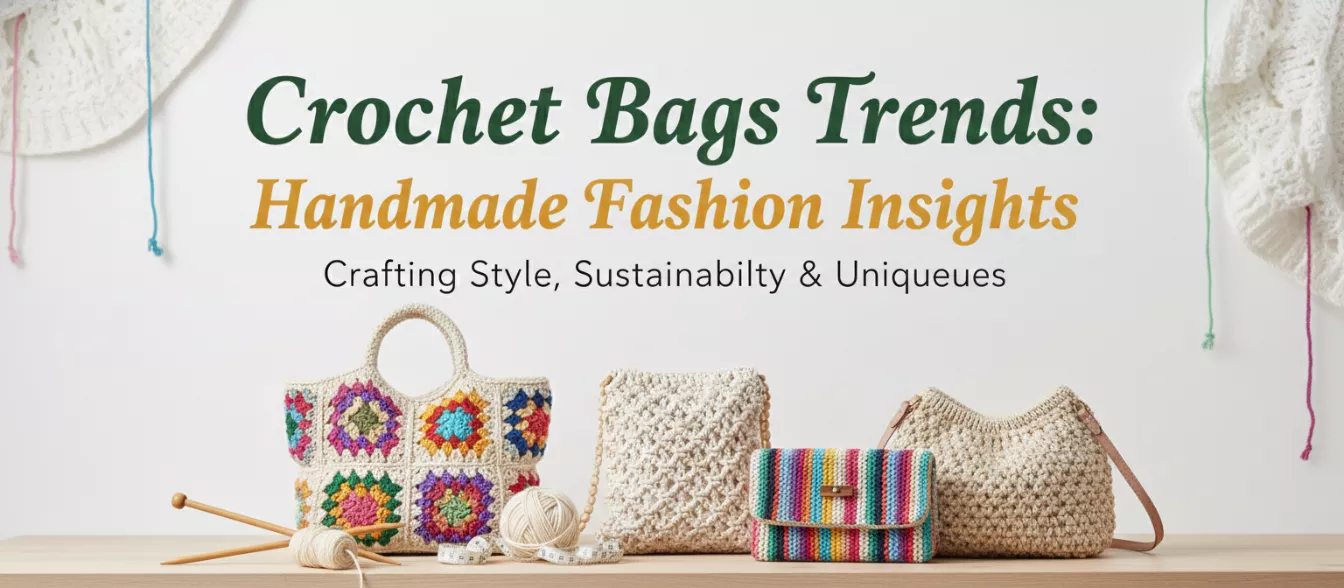
Granny squares are experiencing a major revival, but with a modern lens. Designers are abandoning muted palettes in favor of energetic tones such as Butter Yellow, Tangerine, Lime, and Sky Blue. This modular technique allows each unit to remain distinct, giving brands flexibility in layout and color blocking. As a result, handmade crochet bags using granny square formats appeal strongly to boutique retailers in the USA seeking limited-edition aesthetics.
Intricate Macro-Crochet and Heavy-Gauge Textures
Macro-crochet is one of the most visually impactful directions in the current market. Thick yarns and oversized stitches create bold, sculptural textures that elevate crochet bags from casual to statement accessories. These tactile surfaces generate strong engagement in e-commerce and social media, where texture-driven products perform exceptionally well. Heavy-gauge construction also improves load-bearing capacity, making these designs suitable for everyday use. For the USA market, this balance of visual drama and practicality is central to forecasted handmade crochet bags trends.
Material Innovation in the Craft Sector
Material selection has become the most critical factor in determining the success of any crochet collection. As buyers move away from synthetics, 2026 collections are increasingly defined by biodegradable, recycled, and responsibly sourced fibers.
Sustainable Fibers: Organic Cotton, Raffia, and Hemp
Organic cotton remains the dominant choice for premium crochet production. Its soft feel, breathability, and compatibility with GOTS-certified dyeing processes make it ideal for long-term use.
Raffia and hemp are gaining popularity in resort and summer collections. These fibers are nearly 100% biodegradable and naturally UV-resistant, making them particularly suitable for USA sunbelt markets such as California, Florida, and Texas.
These materials play a central role in shaping handmade crochet bags trends for warm-weather collections.
The Rise of Recycled and Upcycled Yarns
Approximately 38% of current demand in the crochet sector is now driven by recycled fibers. Ocean-bound plastic yarns, recycled PET, and upcycled denim strips are increasingly used to create high-durability designs.
For luxury gifting segments in the USA, blending organic wool with silk or metallic threads adds festive appeal. These premium blends are especially popular during holiday seasons and limited-edition drops.
For verified data on sustainable fiber standards, many fashion brands reference Textile Exchange, a globally recognized authority on responsible textile sourcing.
Strategic Silhouettes: Beyond the Basic Market Shopper
The handmade crochet bags trends of 2026 reflect a clear shift away from shapeless totes toward more structured, intentional silhouettes designed for modern lifestyles.
The Architectural Baguette and Micro-Clutch
The crochet baguette, inspired by late-1990s fashion, has become a top-performing silhouette. Its horizontal “East-West” profile fits neatly under the arm, making it ideal for urban wear.
Micro-clutches are also gaining traction in the USA for social and evening use. Despite their compact size, these pieces are engineered with internal frames to preserve shape and structure.
Structured Satchels and Sack Totes
The sack tote represents the intersection of casual luxury and volume. Relaxed yet substantial, it suits the everyday needs of American consumers.
To meet functional expectations, these designs increasingly include canvas linings and reinforced bases. As a result, handmade crochet bags trends now support work-to-weekend usage rather than purely decorative roles.
Commercial Viability: Sourcing and Exporting Handmade Goods
The USA handicraft market relies heavily on international sourcing, with India emerging as a key production hub for crochet accessories.
Artisanal bags contribute nearly 15% of total handicraft output, making them a high-value export category.
Quality Benchmarks for Global Retail
One of the primary constraints in this sector is inconsistent quality, affecting nearly 36% of export orders. Successful brands mitigate this risk through multi-stage inspection processes.
Stitch density, handle reinforcement, and hardware durability are non-negotiable benchmarks for USA and European retailers.
Ethical compliance is equally critical. Sedex-certified production is now considered a baseline requirement, with buyers willing to pay 20–30% premiums for verified fair-labor practices tied to handmade crochet bags trends.
Logistics and Scaling
Private-label sourcing accounts for 26% of B2B orders in the artisanal segment. This model allows retailers to scale handmade collections without sacrificing exclusivity.
Artisan traceability is also rising in importance. Around 23% of exporters now use QR codes to connect consumers directly with makers, a feature that resonates strongly in the USA market.
Regional Market Analysis: The USA’s Growing Appetite for Slow Fashion
Demand patterns for handmade crochet bags trends vary significantly by region.
USA (Primary Market):
American consumers favor oversized, multi-use designs. Approximately 64% of purchases fall into the mid-price segment, emphasizing durability and versatility.
Europe:
Buyers prefer understated luxury, smaller silhouettes, and heritage-focused craftsmanship.
Asia-Pacific:
While primarily a production hub, this region is also a growing consumer market for Boho-chic crossbody styles in digital colorways.
Caring for Artisanal Investment Pieces: Longevity Tips
One defining aspect of handmade crochet bags trends is the shift toward an investment mindset.
Proper storage using shape protectors prevents yarn stretching. Gentle hand-washing with eco-friendly detergents preserves colorfastness and fiber integrity.
Many brands now offer repair kits or lifetime mending services, reinforcing the sustainability narrative and extending product life cycles.
Conclusion
The handmade crochet bags trends of 2026 represent a powerful convergence of heritage craft and modern commercial engineering. For fashion brands, the opportunity lies in bridging boutique exclusivity with scalable production.
By prioritizing sustainable fibers, structured silhouettes, and export-grade quality standards, retailers can successfully tap into the USD 1.25 billion USA market for artisanal accessories. In an era dominated by automation, the human hand remains fashion’s most valuable differentiator.
FAQs
1. What is driving handmade crochet bags trends in 2026?
Rising demand for sustainable products, wellness-oriented consumption, and individuality are the primary drivers.
2. Are crochet bags durable enough for daily use?
Yes. Heavy-gauge yarns, reinforced linings, and structured bases ensure everyday durability.
3. Which materials dominate current collections?
Organic cotton, recycled PET yarns, hemp, and raffia lead handmade crochet bags trends.
4. Why is the USA the main target market?
The USA accounts for roughly 19% of global import demand, making it the most stable and high-volume market.
5. How can buyers identify quality crochet bags?
Look for consistent stitch density, ethical certifications, and reinforced handle attachments.