
Feb 7, 2026
Leather Belts Styling Tips: Fashion + Utility
Leather Belts Styling Tips: Fashion + Utility
In the United States, a high-quality waist strap is one of the most consistently worn accessories across everyday wardrobes. From corporate offices and business-casual workplaces to weekend denim and frequent travel, these items are a daily necessity for millions of Americans. While the functional role of such an accessory is straightforward—keeping trousers secure—its visual and structural impact is often underestimated. A well-chosen piece defines body proportions, creates visual balance, and links footwear, watches, and other elements into a cohesive outfit.
Despite this importance, these items are frequently treated as an afterthought rather than a deliberate styling element. Understanding leather belts styling tips allows wearers to move beyond basic utility and use them as intentional fashion tools. In the USA, where dress codes vary widely by industry, region, and lifestyle, these details make a noticeable difference. At the same time, the principles discussed here apply globally, making them relevant for international consumers, fashion brands, and exporters.
Whether you are starting with limited knowledge or refining an existing collection, this guide covers everything from material quality and sizing to advanced proportion techniques. By following proven advice, you can build outfits that feel polished, confident, and adaptable across both American and global style contexts.
The Foundation: Understanding Material Quality
Before applying any professional techniques, it is essential to understand the raw material itself. In the USA, these accessories are often worn for long hours—during commuting, office work, travel, and social activities—so durability directly affects comfort and appearance. Not all hides perform the same, and choosing the right grade determines how an item ages over time.
Full-Grain Options
Full-grain is considered the highest-quality selection. It uses the complete outer layer of the hide, preserving natural texture. This makes it exceptionally durable and allows it to develop a rich patina with use. In American wardrobes, these are favored for their longevity and premium feel, especially in professional settings.
Top-Grain Varieties
Top-grain is lightly sanded to remove surface imperfections, resulting in a smoother and more uniform appearance. Many professionals in the USA prefer these for office wear because they balance refinement with flexibility. It is a staple in high-end belt designs.
Genuine Grade
Despite its name, genuine grade refers to lower-quality layers bonded together. These are common in mass-market retail across the USA but often stretch, crack, or peel with regular wear. From a long-term perspective, they offer limited value. Relying on this grade often contradicts the core advice of experts regarding durability.
Bonded Materials
Bonded materials are made from shredded scraps combined with synthetic binders. They lack durability and should be avoided if longevity and appearance matter. Most modern belt designs in the luxury sector avoid this construction entirely.
Understanding these distinctions is the first step toward applying leather belts styling tips that actually last. Quality is the bedrock of any well-curated wardrobe.
Knowing Your Styles: Casual vs. Formal
One of the most common mistakes in the USA is wearing the wrong strap for the occasion. American dress codes range from formal corporate environments to relaxed casual settings, making it essential to understand where each of the diverse belt designs belongs.
Formal Styles
Formal options are designed to support tailored outfits without drawing unnecessary attention.
-
Width: Typically between 1 inch and 1.35 inches.
-
Finish: Smooth, polished, or lightly glossy.
-
Buckle: Small, minimalist frame hardware in silver, gold, or gunmetal.
In American offices and formal events, these are standard with suits, dress slacks, and tailored chinos. One of the most important leather belts styling tips here is restraint—the accessory should complement the outfit rather than dominate it.
Casual Styles
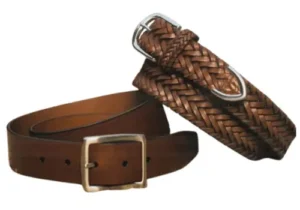
Casual options reflect the relaxed side of American fashion and often feature rugged looks.
-
Width: Usually 1.5 to 1.75 inches.
-
Finish: Matte, textured, suede, pebbled, or braided.
-
Buckle: Larger or heavier, including roller or western-style hardware.
These pair naturally with jeans, cargo pants, and casual chinos, making them staples of everyday USA wardrobes. Utilizing these insights ensures your casual look remains grounded and masculine.
Finding the Perfect Fit: Sizing 101
Fit is one of the most overlooked yet critical areas of fashion. In the USA, where these items are worn for extended periods, incorrect sizing quickly becomes uncomfortable and visually distracting. Proper sizing is a key component of functional elegance.
The Golden Rule
The standard size should be approximately two inches larger than your pant waist measurement. For example, a 34-inch pant typically pairs with a 36-inch strap. This is among the most basic leather belts styling tips.
The Pro Tip
A correctly sized strap should fasten at the third (middle) hole of a five-hole system. This ensures balanced proportions and leaves a clean tail length—an essential detail in professional settings. If you find your belt designs don’t fit this way, it may be time for a resize.
Matching Metals and Colors
Accessory coordination is a hallmark of polished American styling and a core element of a sharp wardrobe.
Material Coordination
The strap should match the color family of your shoes. Black shoes require black; brown shoes require brown. Exact shade matching is not required, but warm and cool tones should align. This is a fundamental rule in the fashion world.
Metal-to-Metal Coordination
Match the buckle with other metal accessories such as watches or rings. Silver with silver, gold with gold. This subtle detail significantly improves overall outfit cohesion and is frequently cited as a top recommendation.
The “Gig Line”: Precision Alignment
The “Gig Line” is a styling principle borrowed from military dress standards and widely respected in American formal wear. It refers to the vertical alignment of your shirt placket, buckle, and trouser fly. Maintaining this alignment creates a disciplined, intentional appearance and is one of the most effective leather belts styling tips for professional environments. It elevates simple belt designs into a sharp, executive look.
Advanced Proportion Techniques
Once the fundamentals are mastered, these accessories can be used strategically to enhance body proportions and outfit balance. This is where personal style becomes a true art form.
Creating Visual Balance
-
Shorter Builds: Matching the strap and trouser colors creates a continuous vertical line, making the body appear taller.
-
Taller Builds: A contrasting color breaks up height and adds a focal point.
-
Women’s Styling: In the USA, cinching over blazers or dresses is increasingly popular for defining the waist and adding structure. Contemporary belt designs for women often focus on these styles.
Texture and Pattern Choices
-
Suede and Braided Options: Ideal for business-casual and smart-casual American outfits. These add tactile interest.
-
Embossed or Patterned Options: These should serve as statement pieces, balanced by simpler clothing. This is a daring way to use leather belts styling tips.
Maintenance: Ensuring Long-Term Value
Since these are everyday accessories in the USA, proper care is essential. Even the best products deteriorate without maintenance. To preserve your investment, follow these steps:
-
Rotation: Avoid wearing the same strap daily to allow the fibers to rest.
-
Conditioning: Apply a specialized conditioner every 6–12 months to maintain flexibility.
-
Storage: Hang vertically or roll loosely to prevent permanent creasing. This keeps your belt designs in pristine condition.
Consistent care ensures that your style remains effective over time rather than undermined by worn materials.
Global Trends and Export Insights for 2026
Looking ahead, the market in the USA is aligning closely with global trends. Quiet luxury, minimalist hardware, and sustainable materials are shaping future belt designs. Vegetable-tanned options are gaining popularity as consumers look for eco-friendly ways to accessorize.
For exporters supplying the USA, meeting sustainability and quality standards is increasingly important. Global benchmarks and trade guidance are available through the International Trade Centre (ITC), while classic American styling principles continue to influence global markets. The evolution of designs toward a mix of heritage and technology is a key theme for the coming years.
Summary Table: Quick Style Reference
| Feature | Formal Style | Casual Style |
| Typical Width | 1″–1.25″ | 1.5″–1.75″ |
| Texture | Smooth, polished | Suede, grainy, braided |
| Buckle Style | Slim frame | Roller or plate |
| Occasion | Business, formal | Casual, weekend |
| Matching Rule | Strict | Relaxed |
Conclusion
Mastering leather belts styling tips is about intentional dressing rather than simple function. In the USA, where these items are worn daily across professional and casual environments, understanding quality, fit, coordination, and proportion makes a measurable difference in appearance. At the same time, these principles remain globally relevant, making them valuable for international consumers and exporters.
By applying these lessons consistently, a strap becomes more than an accessory—it becomes a defining element of personal style. The intersection of classic fashion and daily utility is where true elegance is found. Invest in high-quality belt designs, maintain them well, and use them to anchor your wardrobe.
FAQs
1. Should my leather strap always match the exact color of my shoes?
In formal American settings, you should match the color and finish as closely as possible, while casual looks allow for more flexibility as long as the shades stay within the same family.
2. What is the most versatile color for a beginner to own?
A medium-to-dark brown is the most versatile choice, as it pairs effortlessly with denim, navy, charcoal, and various earth-toned trousers.
3. Is it ever acceptable to wear a black strap with brown shoes?
It is generally considered a fashion error to mix black and brown, as the harsh contrast disrupts the visual flow and coordination of your outfit.
4. How can I tell if a buckle is too large for my outfit?
A buckle is likely too large if it is wider than the strap itself or if it draws more attention than the rest of your ensemble combined.
5. Why do high-quality straps tend to curve or bow over time?
A natural curve develops as the fibers mold to your specific body shape and posture, creating a custom fit that significantly increases long-term comfort.